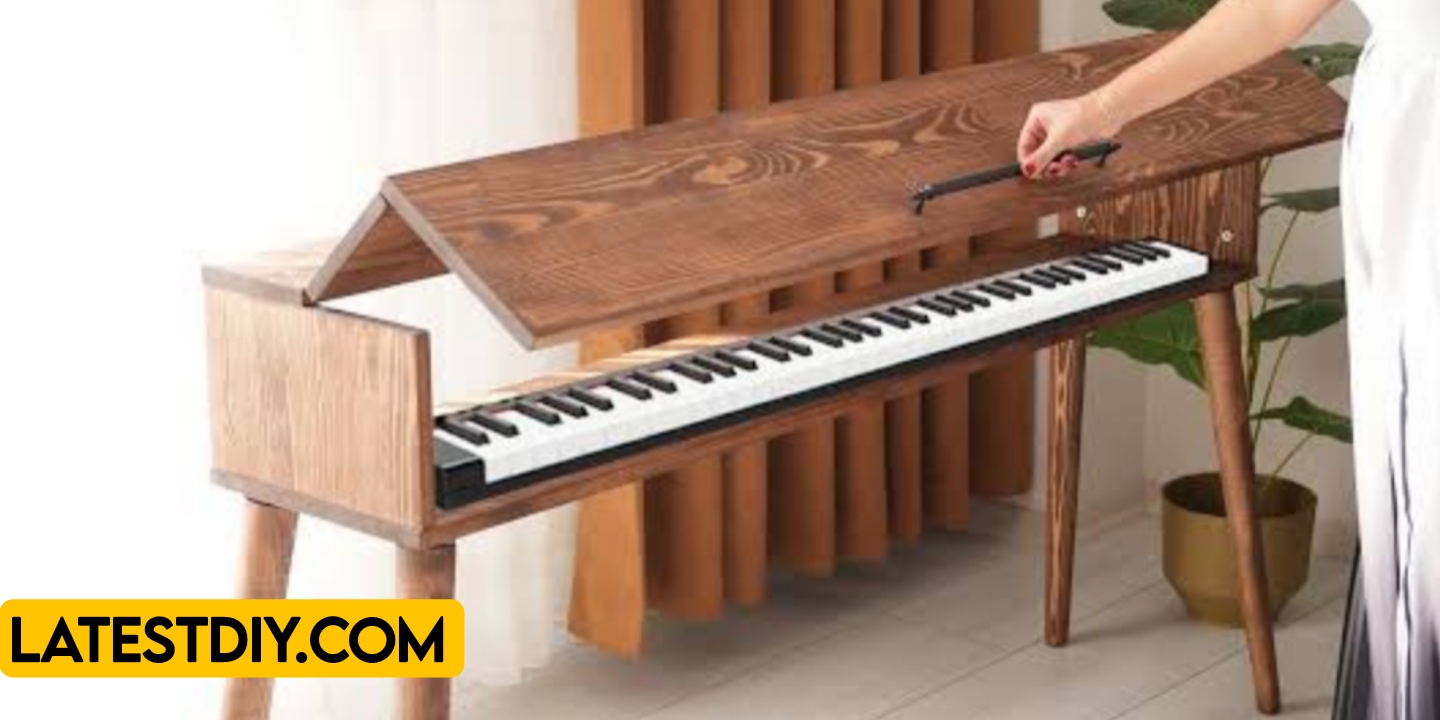
Sometimes a small apartment or music room creates a big problem, and before you realize it, that problem turns into one of the most clever and satisfying woodworking projects you have ever made. This build is exactly that kind of experience. The engineering, the space-saving magic, the functionality, and the entire journey behind this Murphy Desk for pianos and keyboards feels incredibly rewarding for musicians and small-space dwellers.
This project is not just another folding desk. It is something far more special and far more practical. The goal here is to create a space-saving Murphy Desk that folds flat against the wall when not in use, but instantly transforms into a sturdy, full-size desk perfect for placing digital pianos, keyboards, music stands, laptops, and all your music gear.
That means this project must balance two completely different worlds. On one side, there is beautiful woodworking and elegant design. On the other side, there is strong mechanical engineering, pivot systems, weight support, and safety features that must work perfectly every single day without failing.
Welcome to this complete step-by-step journey of building your own Space-Saving Murphy Desk for Pianos or Keyboards.
A few months ago, a friend who is a serious piano player showed me his tiny apartment. His 88-key digital piano was taking up half the living room and he had no proper desk for music production or practice. That moment became the spark for this project. I decided to design and build a Murphy-style desk that could hold a full-size keyboard securely and fold away neatly when not needed.
Before picking up any tools, there was something very important that had to happen first.
Understanding the Murphy Desk Concept for Music
A Murphy Desk works like a Murphy Bed – it folds up vertically against the wall using a strong pivot system. For musicians, this is perfect because keyboards and pianos need a stable, flat surface at the right height, but most people don’t have space to keep them out 24/7.
This design is specially made for:
- Digital pianos (61 to 88 keys)
- MIDI keyboards
- Music production setups
- Home studio desks
- Practice areas in small rooms
The desk must support 50–100+ lbs of weight when open and stay completely secure when folded up.
Why This Murphy Desk is Perfect for Piano Players
Most ready-made solutions are either too weak or too expensive. Building your own gives you custom size, strong construction, and the exact height you need for comfortable playing. It also looks like beautiful furniture instead of cheap plastic.
Materials and Tools Used
Main Wood:
- 3/4 inch plywood (cabinet grade) for the desk surface
- 2×4 and 2×6 lumber for the strong frame
- 1×4 pine for trim and supports
Hardware (Most Important):
- Heavy-duty Murphy bed pistons (110° lift, 80–120 lb rating)
- Piano hinges (extra long)
- Heavy-duty wall mounting brackets
- Locking mechanisms and safety latches
Finish:
- Durable matte black paint + natural wood accents
Tools:
- Table saw, circular saw, drill, level, stud finder, clamps
Total material cost: Around $280–350.
Step-by-Step Process
Step 1: Precise Measurements and Planning
I measured the wall space carefully – 60 inches wide and 48 inches tall when folded. The open desk size is 60″ wide × 30″ deep, perfect for an 88-key keyboard plus laptop and speakers. I drew detailed plans on paper first, including weight distribution and pivot points.
Step 2: Building the Strong Wall Frame
The wall-mounted frame is the backbone of the entire system. I built a rectangular frame using 2×6 lumber screwed directly into wall studs. This frame had to be perfectly level and rock-solid because it carries the full weight.
Step 3: Constructing the Desk Surface
I cut a large 60″ × 30″ piece of 3/4″ plywood. To make it stronger, I added a 2×4 frame underneath. The front edge got a nice rounded hardwood lip for comfort while playing piano.
Step 4: Installing the Pivot and Gas Pistons
This was the most technical part. I installed extra-long piano hinges at the bottom of the desk. Then I mounted two heavy-duty gas pistons on the sides. These pistons make the desk easy to lift and lower smoothly – even with a heavy keyboard on it.
I adjusted the piston pressure carefully so the desk stays open when you want and folds up gently.
Step 5: Adding Support Legs and Locks
When open, the desk needs extra support. I added two folding legs that lock in place automatically. At the top, I installed strong locking latches so the desk stays securely against the wall when folded.
Step 6: Creating Storage and Cable Management
Inside the folded area, I added small shelves for sheet music, pedals, and cables. I also routed channels for power cables so everything stays neat and hidden.
Step 7: Final Finishing and Painting
I sanded everything smooth, applied primer, and painted the frame matte black. The desk top got a durable clear coat so it can handle daily use.
Testing the Murphy Desk Thoroughly
After installation, I did serious real-world testing:
- Placed a full 88-key digital piano + speakers (total 75 lbs)
- Opened and closed the desk 100 times
- Played piano for 3 hours continuously
- Checked stability while pressing hard on keys
- Tested safety locks and emergency release
The desk performed perfectly – smooth operation, zero wobble, and very easy to use.
Benefits of This Space-Saving Murphy Desk
- Saves massive floor space in small apartments
- Perfect height for piano and keyboard playing
- Strong enough for heavy digital pianos
- Looks like stylish wall furniture when closed
- Easy to open and close in seconds
- Built-in storage for music accessories
- Customizable to any room size
- Much cheaper than buying ready-made solutions
- Improves room aesthetics and functionality
- Great for home studios, bedrooms, or living rooms
Comparison Table: Murphy Desk vs Other Solutions
| Feature | Murphy Desk (DIY) | Regular Desk | Keyboard Stand | Wall-Mounted Shelf |
|---|---|---|---|---|
| Space Saving | Excellent | Poor | Medium | Good |
| Weight Capacity | Very High (100+ lbs) | Medium | Low-Medium | Medium |
| Ease of Use | Very Easy | Always open | Basic | Limited |
| Looks | Beautiful furniture | Normal | Basic | Plain |
| Cost | $280–350 | $150–400 | $80–200 | $100–250 |
| Stability for Playing | Outstanding | Good | Average | Poor |
| Storage When Not in Use | Fully folded | Takes full space | Takes space | Partial |
| Customization | Fully custom | Limited | Low | Medium |
Challenges I Faced During the Build
- Getting the gas piston pressure exactly right
- Making sure everything stayed perfectly level
- Supporting heavy keyboard weight without sagging
- Hiding all cables neatly
- Installing into wall studs safely
Every challenge taught me better techniques and made the final desk even stronger.
Frequently Asked Questions (FAQ)
1. How much weight can this Murphy Desk hold?
It can safely hold up to 120 lbs when properly built and mounted.
2. Is it suitable for 88-key digital pianos?
Yes, this design was made specifically for full-size keyboards.
3. How long did the project take?
About 25–30 hours spread over one weekend.
4. Can beginners build this?
Yes, if you are comfortable with basic woodworking and careful measurements.
5. What is the cost compared to buying one?
DIY version costs under $350. Similar commercial Murphy desks cost $800–$2000.
6. Does it damage the wall?
No, if you screw into wall studs properly.
7. How easy is it to fold and unfold?
Very easy – one person can do it smoothly thanks to the gas pistons.
8. Can I add power outlets?
Yes, you can install a recessed power strip easily.
9. What height is best for piano playing?
29–30 inches from floor is ideal for most players.
10. Will you make different sizes?
Yes, the design can be easily adjusted for smaller 61-key keyboards or larger workspaces.
Conclusion
This Space-Saving Murphy Desk for Pianos or Keyboards started as a simple need for more room in a small apartment and turned into one of the most practical and clever projects I have ever built. Through careful engineering, strong materials, and smart design, we created a desk that completely disappears when not needed but gives full professional functionality when opened.
For musicians living in small spaces, this desk solves one of the biggest problems – having a proper playing surface without sacrificing your living area. It proves that you don’t need a big house to enjoy music and creativity. With some plywood, strong hardware, and a bit of patience, anyone can build a beautiful, functional Murphy Desk that makes daily practice and music production much more enjoyable.
If you are a piano or keyboard player struggling with space, I highly recommend building this Murphy Desk. The freedom and satisfaction you will feel every time you fold it away and open up your room again is truly priceless.
My Opinion
This project reminded me why I love building functional furniture so much. It is not always about making big fancy tables. Sometimes the best builds are the ones that solve real everyday problems and make people’s lives better. Watching my friend play his piano comfortably and then fold the desk away in seconds brought a huge smile to my face. This Murphy Desk is more than just wood and metal – it is freedom for musicians in small spaces.
Education Disclaimer:
This article is for educational and informational purposes only. All projects involve tools and materials that can cause injury if proper safety precautions are not followed. Always wear appropriate safety gear, follow manufacturer instructions, and consult professionals when necessary. The author and publisher are not responsible for any injuries, damages, or losses that may occur while attempting to replicate this project.

I’m Shubham, a professional carpenter with 11 years of experience in the craft. I specialize in turning high-quality wood into custom furniture, durable cabinetry, and precise structural work. For me, woodworking isn’t just a job—it’s about building things that last a lifetime