If you have ever worked inside a small garage workshop then you already know that the real problem is almost never the lack of tools but the lack of space to properly use those tools, because at the beginning everything feels manageable and organized but as you slowly add more equipment over time every flat surface starts turning into a temporary storage area which eventually becomes permanent clutter, and before you even realize it the space that was originally meant for working becomes difficult to move around in, making even simple tasks feel more complicated and frustrating than they should be.
And what makes this even more interesting is that the issue is not always about the actual size of the garage but rather how efficiently that space is being used, because the same set of tools can either feel overwhelming and messy or clean and accessible depending on how they are organized, which is exactly where this project begins to make sense as a practical solution rather than just another piece of shop furniture.
When I first started thinking about building a mobile tool stand, instead of going with the usual approach of adding more material for strength and flexibility, I decided to impose a constraint that the entire build would come from a single sheet of plywood, because sometimes limiting your resources actually forces you to think more carefully about every decision you make, from how you cut the pieces to how you assemble them, which ultimately leads to a design that is more efficient and intentional.
This one-sheet concept is not just about saving money or reducing waste, but about creating a system where every single cut has a purpose and every piece contributes directly to the final structure, because when you only have one sheet to work with you naturally avoid unnecessary bulk and instead focus on maximizing functionality within a very defined boundary, which is exactly what a small garage shop needs.
Before making a single cut, the most important step in this entire process is planning the layout of the plywood sheet, because once you start cutting there is very little room for error or adjustment, and when all your material comes from a single sheet every measurement becomes critical, which means you have to carefully think through the dimensions of each panel, the placement of shelves, and how everything will come together during assembly.
This stage is not just about drawing lines on plywood but about visualizing the entire structure in advance, understanding how each component interacts with the others, and making sure that the sequence of cuts allows you to extract all necessary parts without wasting material, because a well-planned layout turns what could be a complicated build into something surprisingly smooth and efficient.
Cutting the Sheet
Once the layout is finalized, the cutting process begins, and while it may be tempting to move quickly and get all the pieces ready as fast as possible, this is actually the stage where patience becomes most important, because even a small inaccuracy in one panel can create alignment issues later during assembly, especially in a mobile stand where stability is critical.
Every cut needs to be measured carefully, marked clearly, and executed with control so that the edges remain straight and consistent, because clean cuts not only improve how the final stand looks but also ensure that the joints fit tightly together, which directly affects the overall strength and durability of the structure.
Assembly Process
After all the pieces are cut, the assembly process is where everything starts to come together, and this is the moment when your planning is truly tested, because if your layout and cuts were accurate then the panels will align naturally and the structure will begin to take shape without unnecessary adjustments, but if there were mistakes earlier then they will become very obvious at this stage.
To ensure the stand is strong enough to handle both weight and movement, I used a combination of glue and screws, because while glue provides long-term bonding strength, screws add immediate structural support, especially important for a mobile unit that will experience dynamic forces as it is pushed, pulled, and repositioned throughout the workshop.
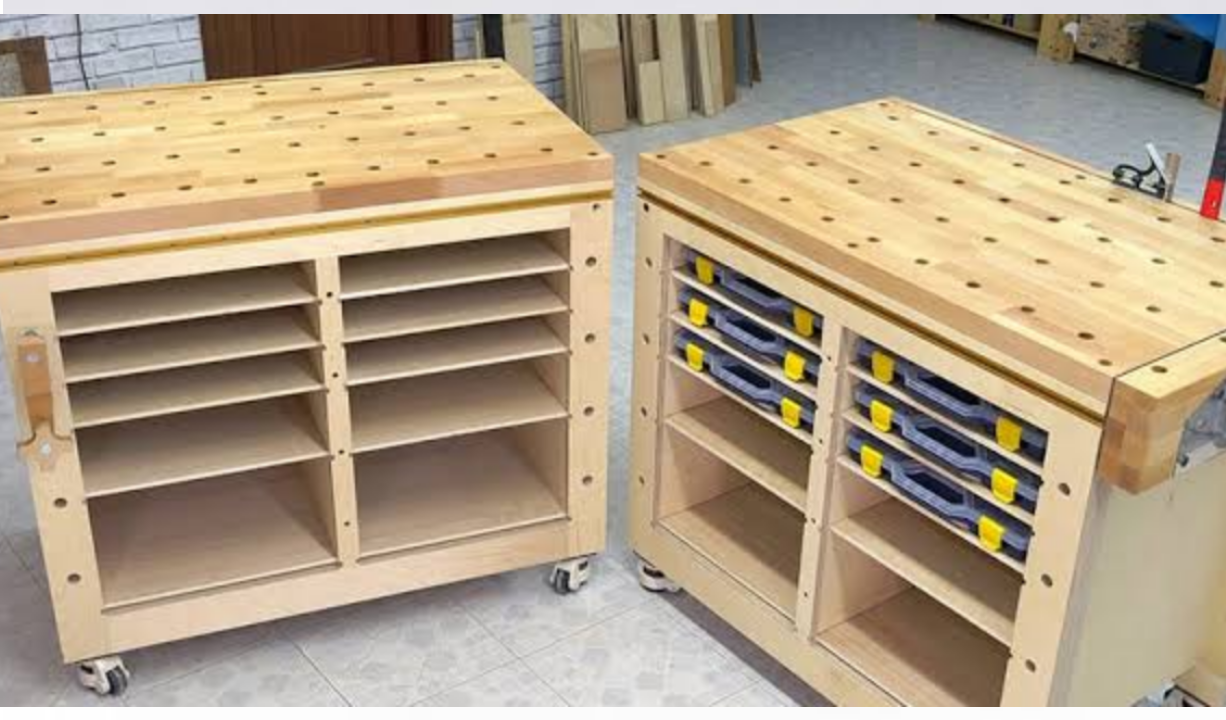
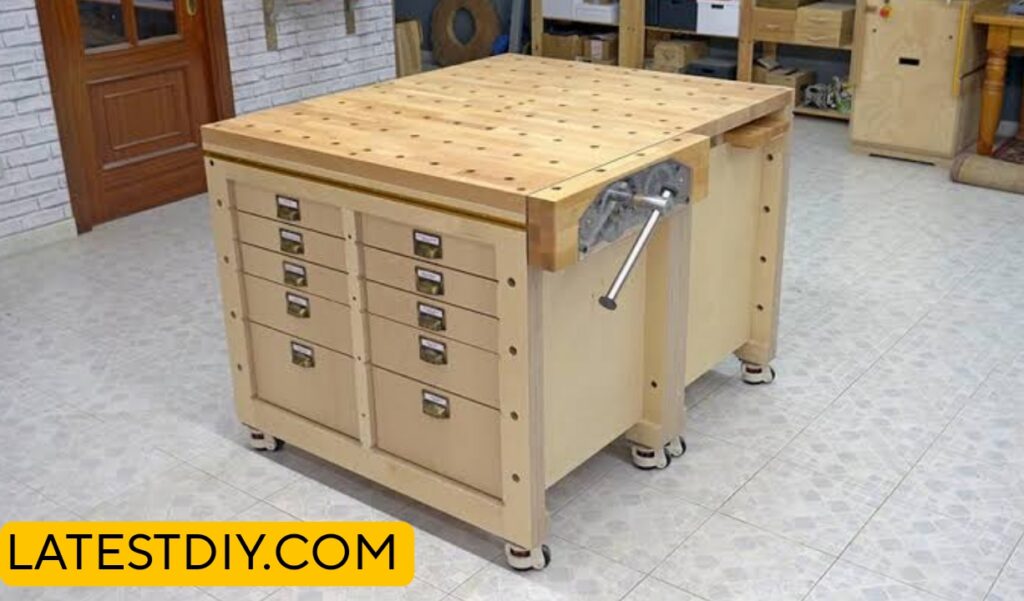
The defining feature of this build is mobility, because a stationary tool stand only solves part of the problem while a mobile stand completely transforms how you interact with your workspace, allowing you to bring your tools directly to where you are working instead of constantly moving back and forth, which not only saves time but also reduces physical effort and improves efficiency.
Choosing the right wheels is critical because they need to support the full weight of the stand along with the tools stored on it, while also including a reliable locking mechanism to keep the stand stable during use, since a moving platform without proper locks can quickly become both inconvenient and unsafe.
Structural Strength
One of the biggest challenges with a one-sheet build is maintaining strength without adding extra material, which means the design itself has to do most of the work, and this is achieved by reinforcing key areas such as the base, distributing weight evenly across the structure, and ensuring that all joints are properly secured.
This approach highlights an important principle in woodworking, which is that strength does not always come from using more material but from using material more intelligently, because when forces are distributed correctly even a relatively lightweight structure can perform reliably over time.
Storage Optimization
The real purpose of this tool stand is not just to hold tools but to organize them in a way that improves workflow, which is why the internal layout is designed to maximize accessibility while minimizing wasted space, ensuring that frequently used tools are easy to reach while less frequently used items can be stored efficiently without getting in the way.
By utilizing vertical space and creating multiple levels of storage, the stand is able to hold a significant number of tools within a compact footprint, which is especially valuable in small garage shops where floor space is limited but vertical space is often underutilized.
Finishing and Practical Use
Once the structure is complete, the finishing stage helps refine the overall feel of the stand by smoothing edges, cleaning surfaces, and optionally applying a protective coating to guard against moisture and wear, which not only improves durability but also makes the stand more pleasant to use on a daily basis.
And when the stand is finally put into use, the biggest difference becomes immediately noticeable, because instead of working around clutter you are now working with a system that supports your workflow, making your tools more accessible, your movements more efficient, and your entire workspace more organized.
This one-sheet mobile tool stand works exceptionally well because it combines efficiency, mobility, and strength into a compact design that saves space while improving organization, allowing you to make better use of your workshop without adding unnecessary bulk or complexity.
Drawbacks
The main limitation of this build is that it requires careful planning and precise cutting, because working within the constraint of a single sheet leaves little room for mistakes, and any inaccuracies can affect both the assembly process and the final stability of the stand.
Frequently Asked Questions
What does “one-sheet” mean?
A one-sheet build means the entire project is made from a single sheet of plywood, which helps reduce cost, waste, and unnecessary complexity.
Is it strong enough for heavy tools?
Yes, as long as the design is properly reinforced and assembled correctly, it can support a significant amount of weight.
Why are wheels important?
Wheels allow the stand to move easily, making your workflow more efficient by bringing tools directly to your work area.
Can beginners build this?
Yes, beginners can build this project, but they need to focus on accurate measurements and careful cutting to achieve good results.
Is plywood a good material for this?
Plywood is ideal because it is strong, stable, and less likely to warp compared to solid wood, making it perfect for structural builds like this.
Conclusion
If your garage workshop constantly feels crowded and inefficient, then the solution is not necessarily to reduce the number of tools you own but to improve how they are organized, and this one-sheet mobile tool stand provides a simple yet highly effective way to transform your space into something more functional, flexible, and enjoyable to work in.
I’m Shubham, a professional carpenter with 11 years of experience in the craft. I specialize in turning high-quality wood into custom furniture, durable cabinetry, and precise structural work. For me, woodworking isn’t just a job—it’s about building things that last a lifetime