Sometimes a project starts with something very simple. A piece of wood, a few tools, and an idea that seems easy enough to execute. But once the process begins, things start to reveal themselves in a completely different way. What looked simple from the outside slowly begins to show layers of effort, patience, learning, and unexpected challenges.
In this project, the process itself becomes the story. Without large powered machines and without three-phase power in the new shop yet, the entire workflow shifts. Tools that had not been used in years suddenly become essential again. At the same time, a completely new tool enters the process, one that many people debate about in woodworking circles.
Old tools and new technology begin to mix together. Hand planes meet CNC machines. Traditional woodworking meets digital toolpaths and modern design software. That combination creates something unique, but it also raises some interesting questions.
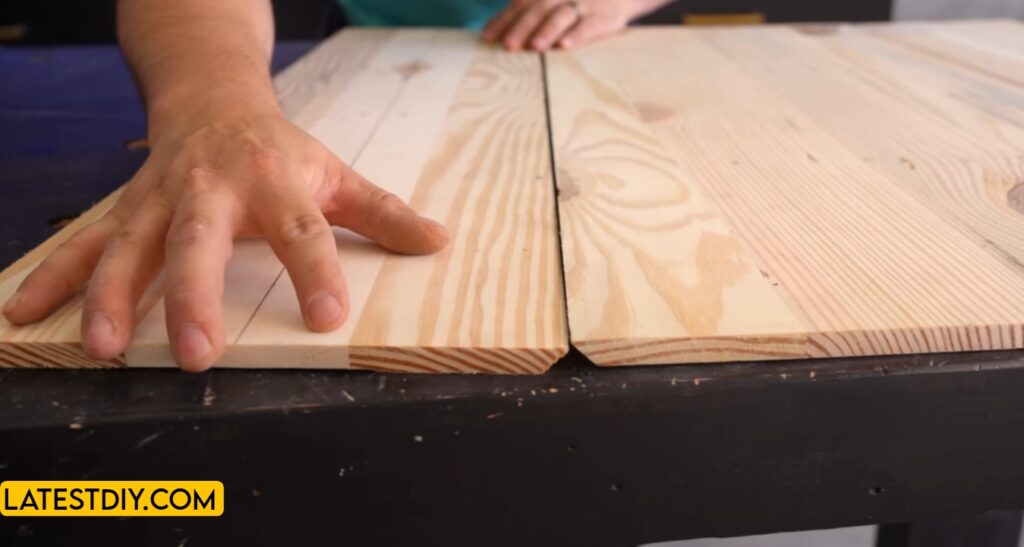
Is pallet wood really free?
Is using a CNC machine cheating?
And how much effort and complexity goes into something that appears simple when it’s finished?
These questions slowly unfold throughout the project.
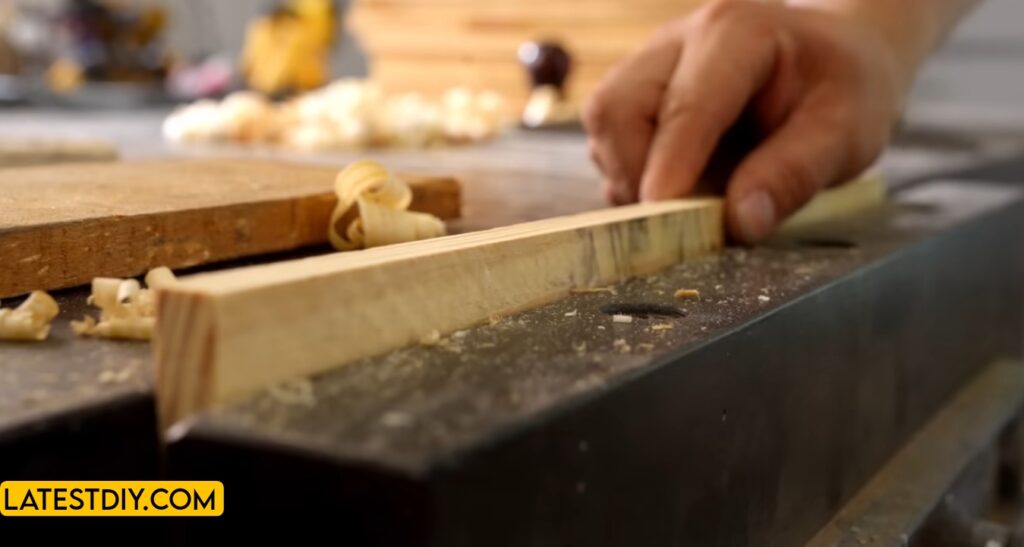
Pallet Wood: Is It Really Free?
For this build, pallet wood became the main material. The reason was simple. During the move to the new shop, countless pallets were used to transport machines and equipment. Those pallets ended up sitting around, and instead of throwing them away, they became the starting point of this project.
On the surface, pallet wood seems like free material. Many videos online even revolve around that exact idea — turning free pallet wood into expensive furniture or profitable projects.
In a literal sense, the wood really was free. The pallets were found on the side of the road and brought into the shop. But the moment work begins, that idea of “free” starts to feel different.
Breaking down pallets takes a huge amount of time. Each board has to be separated carefully. The nails used in pallets are incredibly strong and ribbed, which makes them extremely difficult to remove. Some of them refuse to move at all and instead break tools or snap wood in half.
After the pallets are finally dismantled, the wood itself is often rough, uneven, and weathered. Many pallets are made from soft pine, and the boards are far from ready to use in furniture.
So while the raw material may technically cost nothing, the amount of effort required to make it usable tells a completely different story.
A New Shop Without Big Machines
Another important part of the project was the move to a new workshop. The previous shop still had two years left on the lease, but sometimes the right moment to move does not line up perfectly with practical timing.
The decision was made anyway.
However, the new shop was not fully set up yet. The large woodworking machines that normally handle tasks like jointing and planing were not powered because the shop did not yet have three-phase electricity.
That limitation forced a return to older tools.
One of those tools was the Stanley Number Seven Jointer Plane, a hand tool that had been sitting unused for years. Despite its long break from work, it was still incredibly sharp and reliable. The tool immediately proved why traditional woodworking tools have such a strong reputation.
Using the hand plane to joint boards became a reminder of how satisfying manual work can be.
Preparing the Wood Panels
Before any design work could begin, the pallet boards needed to be prepared. Rough edges cannot simply be glued together. If two uneven surfaces are glued, the joint will be weak and unreliable.
That is why boards must be jointed.
Using the jointer plane, the edges of the pallet boards were flattened and squared so that they could form strong panels when glued together. At this stage, the boards looked rough and unattractive, but that did not matter yet.
The goal was simply to create flat panels that would later become part of a much larger design.
Creating the Mosaic Table Design
Most pallet wood furniture follows a very predictable style. Boards are lined up next to each other and turned into a tabletop. While that approach works, it can also feel repetitive and uninteresting.
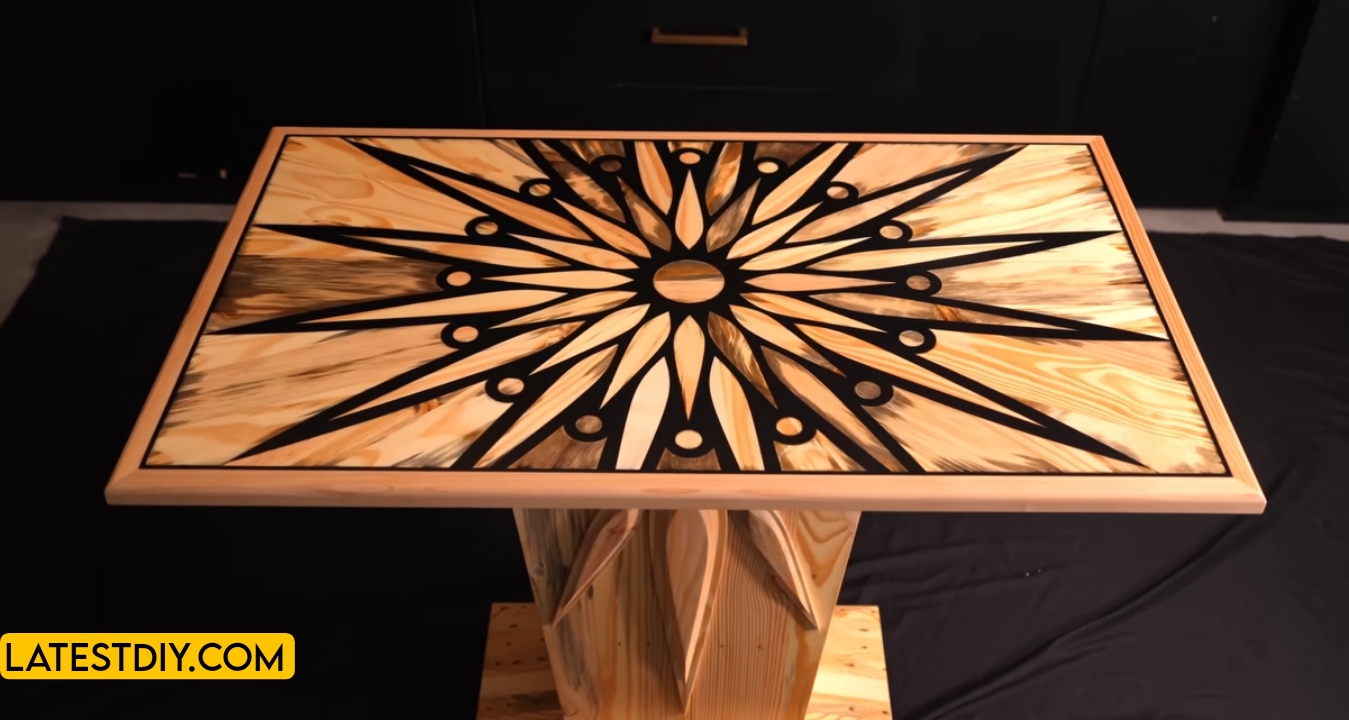
Instead of a simple board layout, the plan was to create a mosaic pattern.
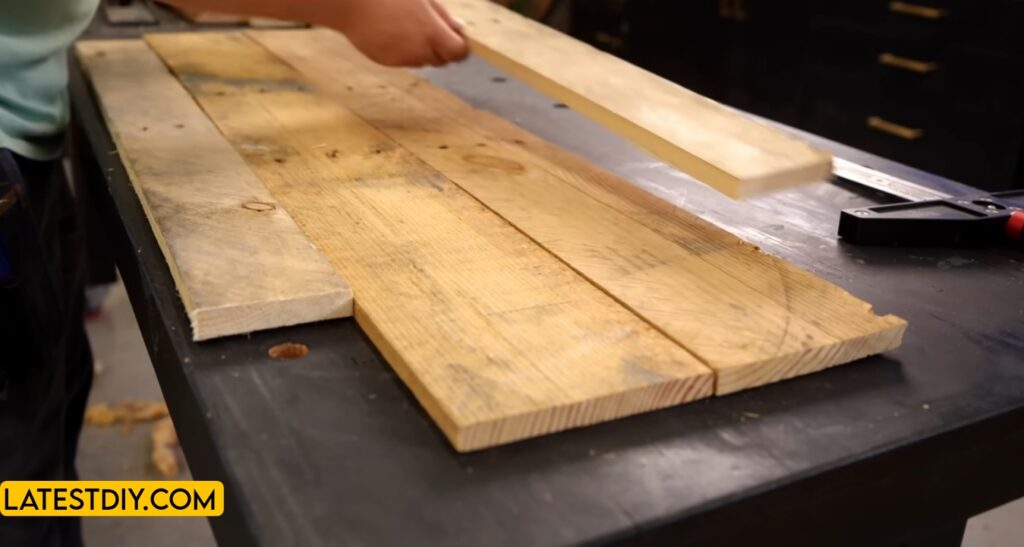
To make that possible, smaller panels were first created from the pallet boards. These panels would later be cut into different shapes and arranged like puzzle pieces across the surface of the table.
Before cutting those shapes, a base panel had to be prepared. This panel was not ordinary MDF but a moisture-resistant fiberboard called Medex, chosen because the table would eventually live outdoors.
The surface of this base panel was carved with precise outlines that would guide the placement of each mosaic piece.
Learning the CNC Machine
With the panels prepared, the next step involved the CNC machine. This particular CNC machine could run on standard 120-volt power, which made it usable even without the shop’s full electrical setup.
However, using a CNC machine is not as simple as pressing a button.
Designing tool paths requires software. In this project, the software used was Fusion, which includes a manufacturing section for creating CNC instructions. Learning how to create those instructions took days of watching tutorials and experimenting.
Tool paths, bit selection, cutting strategies, and G-code generation all became part of the learning process.
From the outside, a CNC machine might look like magic. But behind every automated cut is a large amount of planning and preparation.
When the first successful cut finally happened, it felt like a major milestone.
Cutting and Placing the Mosaic Pieces
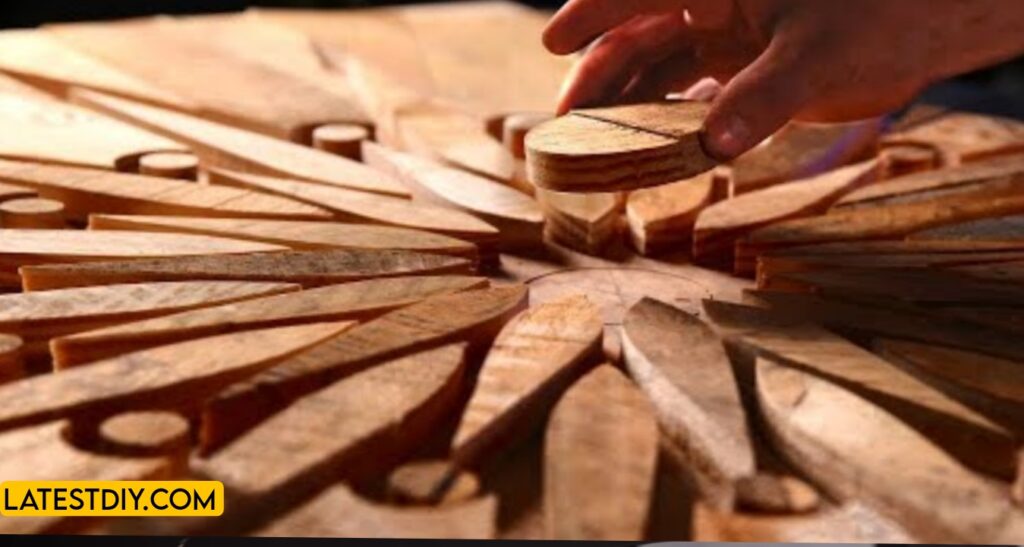
Once the CNC began cutting shapes from the pallet wood panels, the mosaic pattern started to take form.
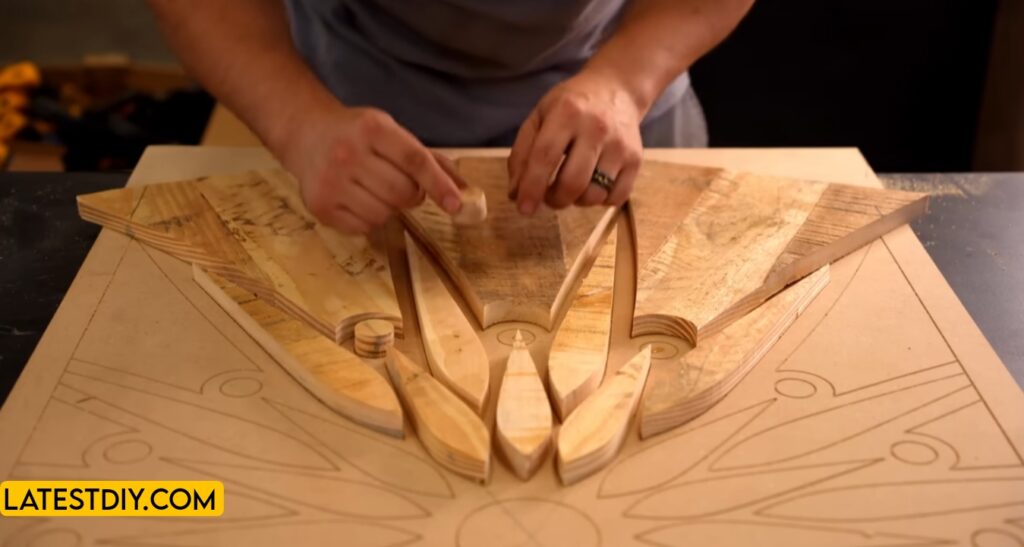
Each piece could be placed into its exact location on the base panel thanks to the guide lines that had been carved earlier. While the CNC handled the cutting, the process of arranging and gluing each piece was still done by hand.
The result was a combination of digital precision and manual craftsmanship.
It also created an interesting internal debate. Was using the CNC machine cheating?
At first glance, it might look like the machine is doing all the work. But in reality, the design process, the learning curve, and the preparation behind each cut often take more time than traditional methods.
Safety Lessons and Unexpected Problems
Working with pallet wood also introduced some unexpected health risks.
During one part of the project, dust collection and masks were not used properly. Within minutes, the dust exposure caused severe discomfort and illness that lasted the rest of the day.
The likely cause was mold inside the pallet wood, which highlighted the importance of respirators and proper dust management when working with reclaimed materials.
Later in the project, another mistake occurred when the CNC accidentally struck a hold-down screw, damaging the cutting bit. Surprisingly, the damaged bit continued cutting, but the quality of the cuts became strange and inconsistent.
Mistakes like these became part of the learning experience.
Breaking Traditional Woodworking Rules
The design of this table intentionally broke several traditional woodworking rules.
One major rule involves wood movement. Wood expands and contracts depending on temperature and humidity. Because this table would live outdoors, that movement could be significant.
The design included a frame around the mosaic tabletop, which could potentially restrict that movement and create stress in the wood.
Another rule involved attaching unstable wood pieces to a stable substrate and then locking everything together with epoxy. This combination creates uncertainty about how the materials will behave over time.
Despite these risks, experimentation was part of the goal.
The Epoxy Pour
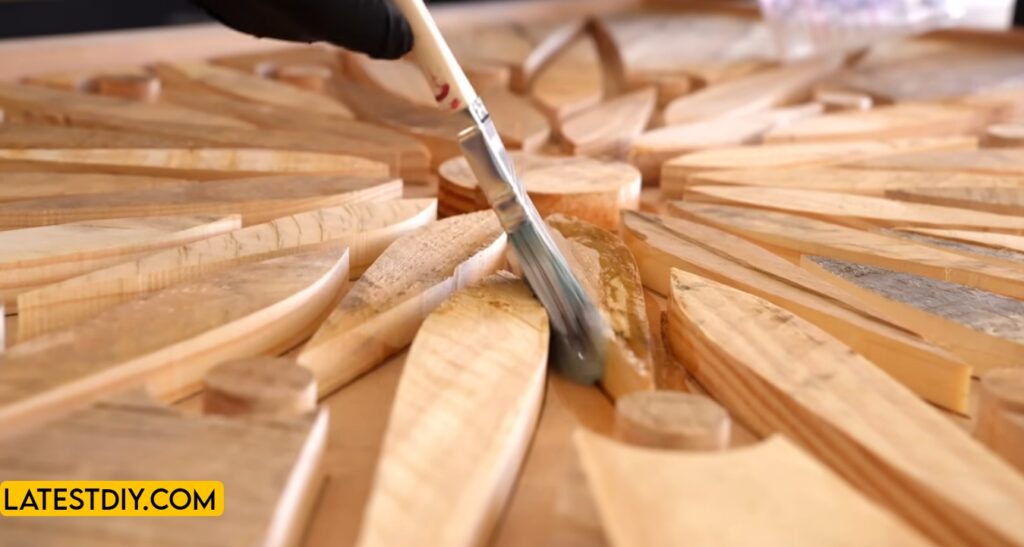
To complete the mosaic surface, epoxy was poured into the gaps between the wood pieces.
A deep-pour epoxy was used because it could be poured up to about one inch thick in a single layer. Black pigment was added to the mixture, creating a dramatic contrast between the wood pieces.
The pour went surprisingly well, producing a smooth surface with no visible bubbles.
However, the black epoxy also seeped slightly into the surrounding wood, creating dark stains around some of the mosaic pieces. Instead of ruining the project, the staining added character to the reclaimed pallet wood.
Building the Base
While the epoxy cured, work began on the table base.
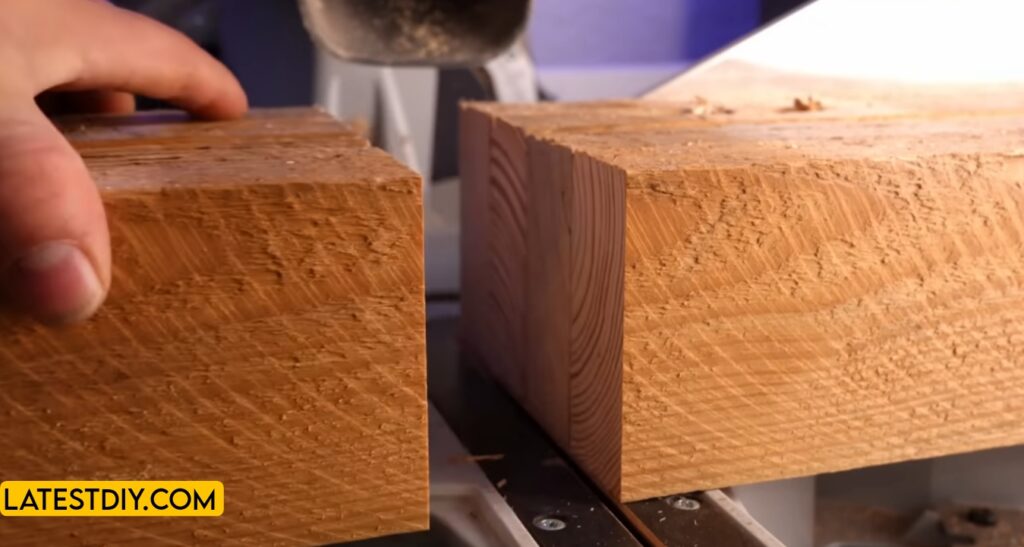
Large wooden blocks were glued together to create the lower structure. Without large machines available, flattening and shaping these pieces required creative use of the CNC and hand tools.
The base design included long tapers that would be extremely difficult to create using simpler tools like a router or table saw. This made the CNC machine especially useful for shaping the structure.
Even with careful planning, mistakes still happened. At one point, an incorrect axis setting caused the CNC to remove a large chunk from the back of the base.
Effort Behind Simplicity
Fortunately, the damage was on a hidden surface and could be repaired.
By the end of the project, three major questions had emerged.
First, is pallet wood really free?
Second, is using a CNC machine cheating?
And third, how much effort and complexity go into something that appears simple?
The answer to the first question becomes obvious once the work begins. Free materials often require enormous amounts of labor before they are usable.
The second question is more about perspective. Learning a new tool can feel intimidating, and sometimes people reject new technology simply because it is unfamiliar.
The final question may be the most important. Simple objects often hide extraordinary amounts of effort, planning, and learning.
Even something as basic as a table can represent weeks of experimentation, problem-solving, and growth.
Pros of This Project
- Reclaimed pallet wood gives new life to discarded materials
- Combination of traditional tools and modern CNC technology
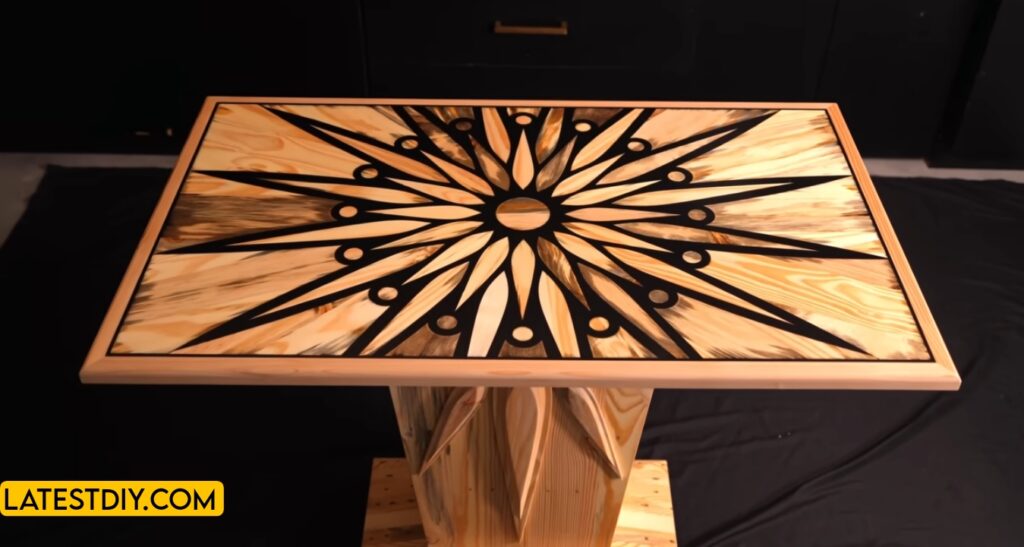
- Unique mosaic design creates a visually striking tabletop
- Learning new tools expands woodworking skills
- Outdoor-ready materials improve durability
Challenges and Drawbacks
- Pallet wood requires significant preparation
- Hidden mold and dust can create health risks
- CNC learning curve is time-consuming
- Wood movement may affect long-term durability
- Mistakes in tool paths can damage parts quickly
Conclusion
In the end, the project became more than just building a table.
It became a journey through old techniques and new technologies. It highlighted the hidden work behind reclaimed materials and the patience required to learn unfamiliar tools.
Most importantly, it demonstrated a simple truth.
Things that appear simple on the surface often contain an incredible amount of effort, experimentation, and learning underneath.
FAQs
1. Is pallet wood really free?
Technically yes, but preparing and processing it takes a lot of time and effort.
2. Why use pallet wood for furniture?
It is recycled material and can create unique textures and character.
3. Is CNC woodworking considered cheating?
Not necessarily. CNC still requires design, programming, and planning.
4. What is a jointer plane used for?
It is used to flatten and straighten the edges of boards for strong joints.
5. Why was Medex used for the base panel?
Medex is moisture-resistant, making it suitable for outdoor furniture.
6. What is deep-pour epoxy?
It is a type of epoxy designed to be poured in thick layers.
7. Why did the epoxy stain the wood?
The wood was not sealed enough before the pour, allowing the epoxy pigment to seep in.
8. What are the risks of using pallet wood?
Possible mold, rough surfaces, and hidden nails.
9. Why was the CNC machine useful in this project?
It allowed precise cutting of complex mosaic shapes.
10. What was the biggest lesson from the project?
Even simple projects involve far more effort and complexity than people expect.

I’m Shubham, a professional carpenter with 11 years of experience in the craft. I specialize in turning high-quality wood into custom furniture, durable cabinetry, and precise structural work. For me, woodworking isn’t just a job—it’s about building things that last a lifetime